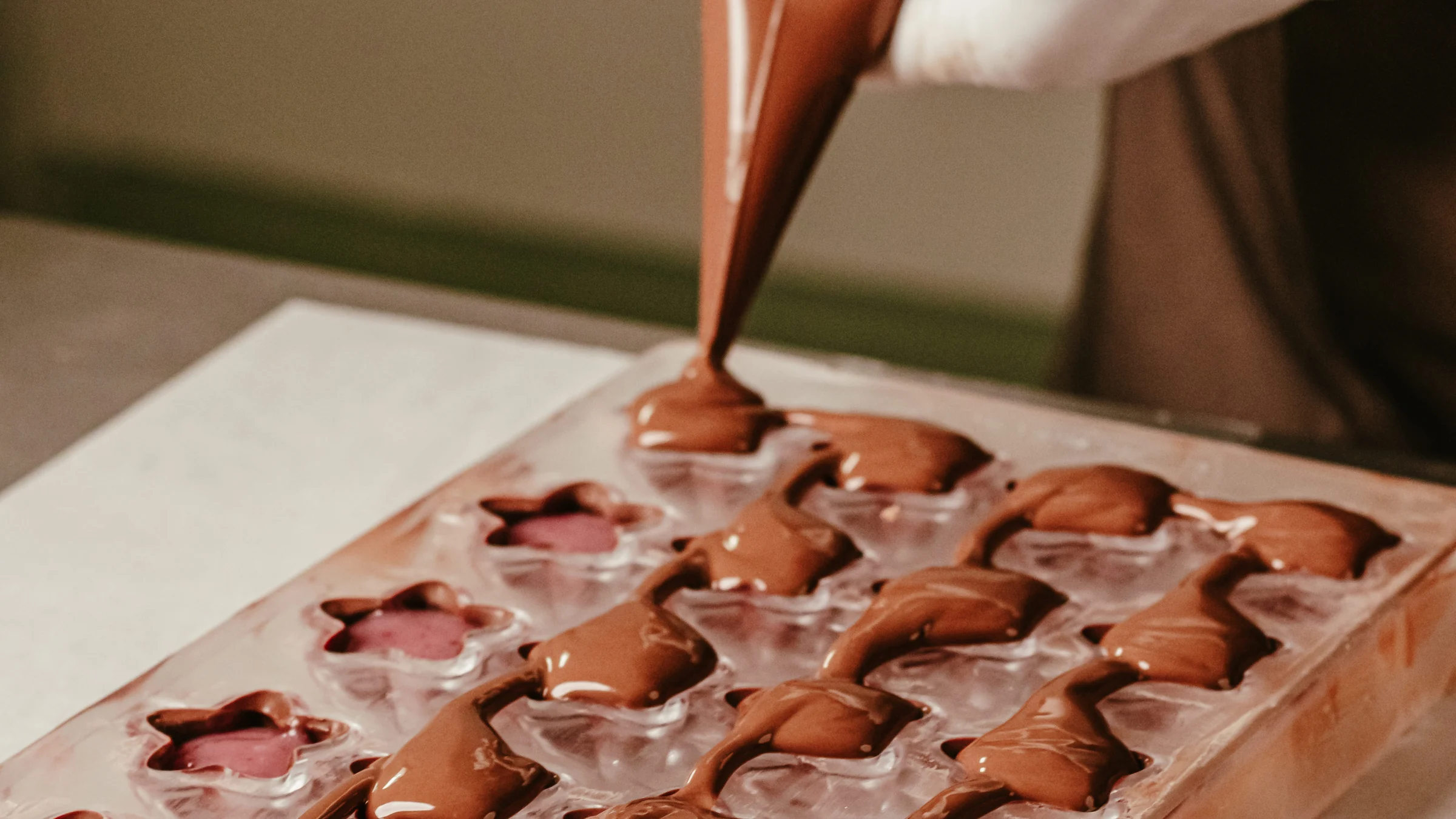
The workshop
A small room in Prilep, and a lot of patience.
Daniela makes every praline by hand, in batches small enough to check one by one.
Seven fillings
Trained in Britain
Made to order
DG Chocolatier began the way most small workshops do. One person, a set of moulds, and the stubborn idea that a praline should be worth the four days it takes to make.
Daniela trained at a pastry academy in the United Kingdom, under Andrey Dubovik, one of the most respected names in pralines and bonbons. What she brought back is a way of working rather than a recipe book: seven fillings, thirty-five shapes, twenty-two figures, and the boxes that carry them, all by hand.
The work sits somewhere between the artistic and the scientific. Temperature, timing and humidity decide as much as taste does, and the tradition of the praline decides the rest.
Chocolate does not let you hurry. You work at its speed, or you start again.
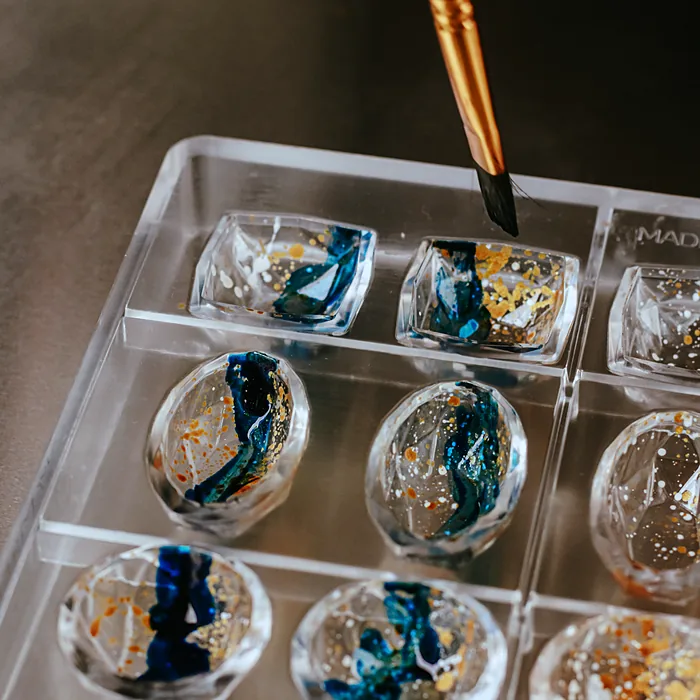
Coloured cocoa butter, brushed into the mould before any chocolate goes near it.
How it is made
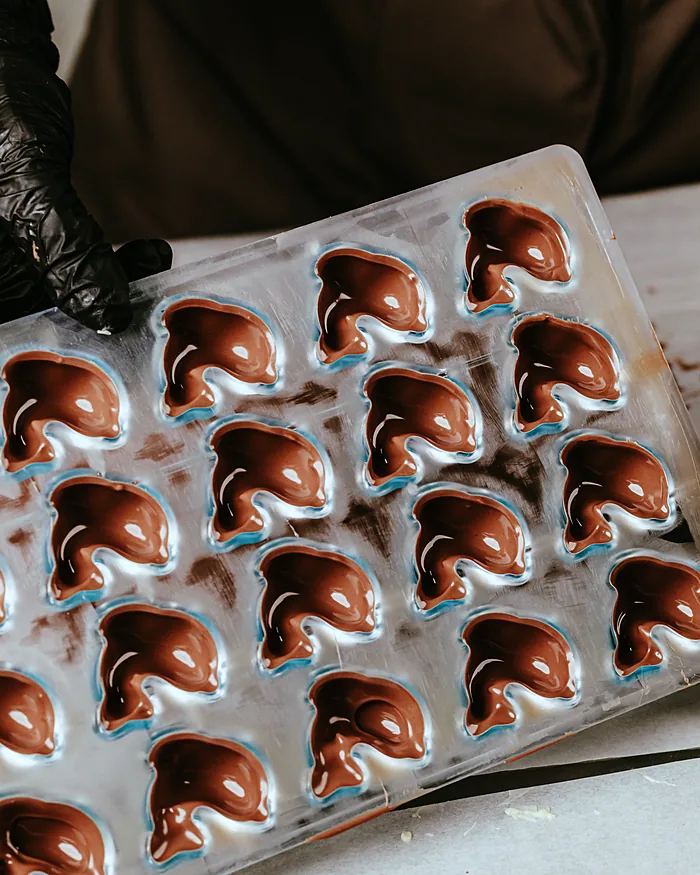
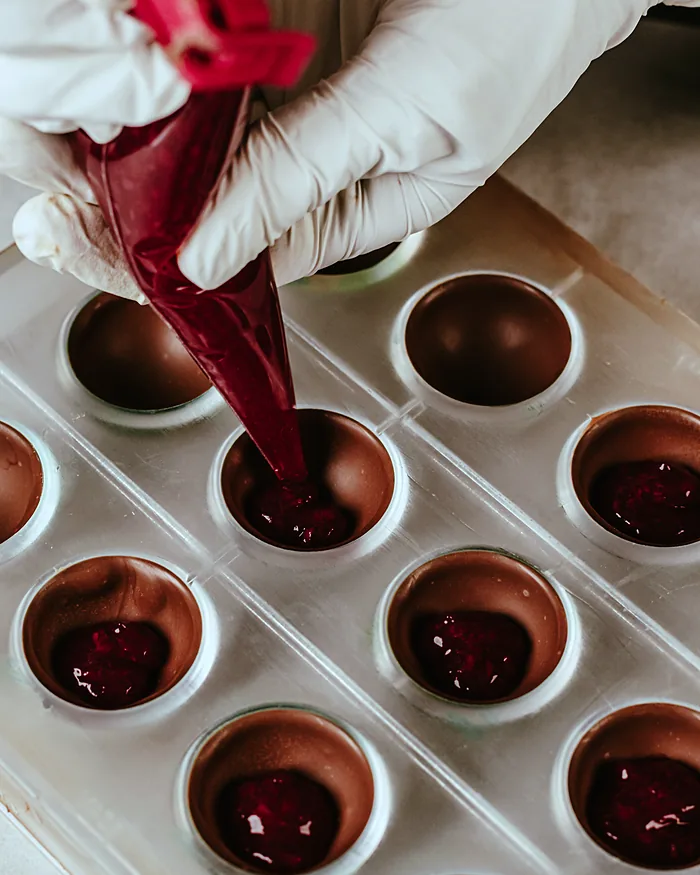
Painted first, filled second, and left alone in between.
None of it can be hurried. Temperature, timing and humidity decide as much as the recipe does, and the tray that comes out at the end is the only proof that all three behaved.
Colour
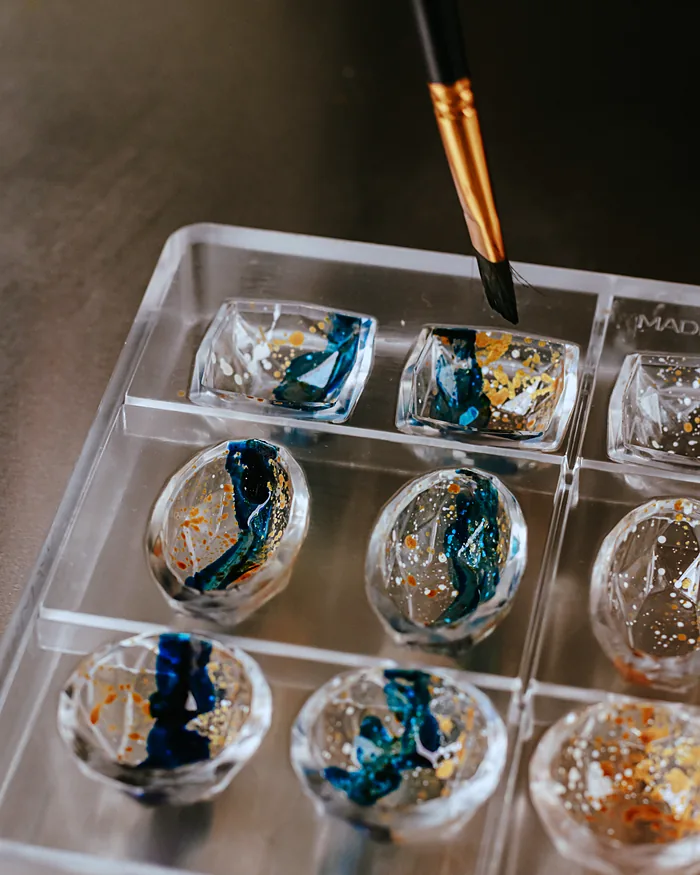
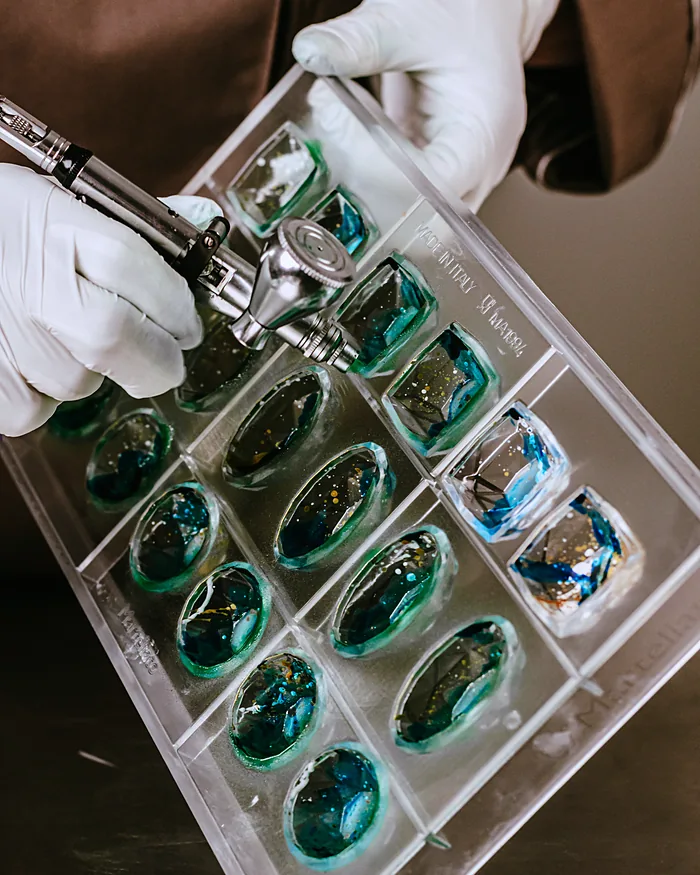
The colour is cocoa butter, not paint.
Every colour on a shell is cocoa butter with pigment, warmed to the same temperature as the chocolate it will meet. It is edible, it sets hard, and it is the reason a praline can be navy blue or lime green without tasting of anything but chocolate.
The patterns are made by hand, one mould at a time. No two trays come out identical, and we have stopped trying to make them.